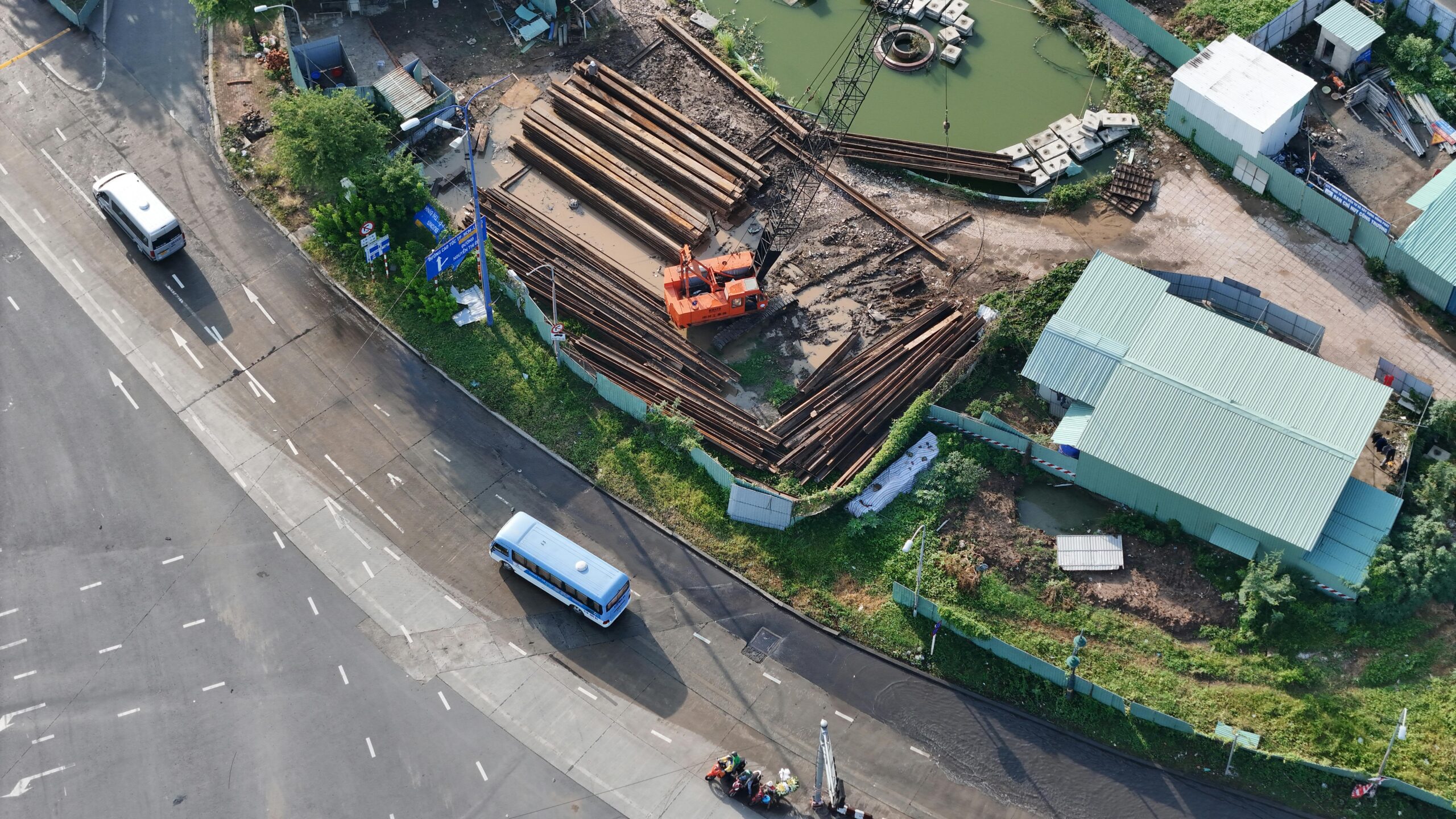
The construction industry stands on the brink of a transformative revolution, driven by innovative materials that can adapt to environmental changes and repair themselves autonomously. These groundbreaking technologies promise to redefine how we build, maintain, and think about the infrastructure that shapes our modern world.

For centuries, construction materials have remained relatively static in their properties once installed. Concrete cracks, steel corrodes, and traditional building components gradually deteriorate under stress and environmental exposure. However, the emergence of adaptive and self-healing materials represents a paradigm shift that could dramatically extend the lifespan of structures while reducing maintenance costs and environmental impact. This technological leap forward isn’t science fiction—it’s happening now, reshaping the future of construction with smarter, more resilient buildings that respond intelligently to their surroundings.
🔬 Understanding Self-Healing Materials: Nature’s Blueprint for Construction
Self-healing materials draw inspiration from biological systems that naturally repair damage. When you cut your skin, your body initiates a complex healing process without external intervention. Scientists and engineers have translated this biological principle into construction materials that can detect and repair damage autonomously, extending structural longevity significantly.
The concept of self-healing concrete, for instance, incorporates bacteria or microcapsules containing healing agents within the material matrix. When cracks form and water infiltrates, these dormant bacteria activate and produce limestone, effectively sealing the crack. This biomimetic approach has demonstrated remarkable potential in laboratory settings and real-world applications, with some materials showing the ability to heal cracks up to 0.8 millimeters wide.
Similarly, self-healing polymers used in coatings and sealants employ chemical mechanisms that trigger repair processes when molecular bonds break. These materials contain reversible chemical bonds or encapsulated healing agents that flow into damaged areas, polymerize, and restore structural integrity. The economic implications are staggering—reducing the need for costly repairs and extending building lifespans by decades.
🏗️ Adaptive Materials: Buildings That Respond to Their Environment
Beyond self-repair, adaptive materials represent another frontier in smart construction. These materials change their properties in response to environmental stimuli such as temperature, humidity, light, or mechanical stress. Shape-memory alloys, for example, can return to their original form after deformation when exposed to specific temperature ranges, making them ideal for seismic-resistant structures.
Thermochromic and photochromic materials alter their optical properties based on temperature or light exposure, offering dynamic solutions for energy-efficient building envelopes. Windows incorporating these technologies can automatically adjust their tint to regulate heat gain, reducing cooling loads and enhancing occupant comfort without mechanical systems or electrical consumption.
Phase-change materials (PCMs) embedded in building components absorb and release thermal energy as they transition between solid and liquid states. This thermal mass effect stabilizes indoor temperatures, reducing heating and cooling demands. When integrated into wallboards, concrete, or insulation, PCMs can significantly improve a building’s energy performance while maintaining comfortable interior environments throughout daily temperature fluctuations.
💡 The Science Behind Self-Healing Concrete Technology
Concrete remains the world’s most widely used construction material, but its susceptibility to cracking poses significant durability challenges. Traditional concrete repair is labor-intensive, expensive, and often addresses symptoms rather than underlying causes. Self-healing concrete technologies offer elegant solutions to this persistent problem through several innovative approaches.
Bacterial concrete incorporates specially selected bacteria species, typically from the genus Bacillus, along with calcium lactate as a nutrient source. These bacteria remain dormant in the dry, alkaline concrete environment but activate when cracks allow water and oxygen to penetrate. Once activated, the bacteria metabolize the calcium lactate, producing limestone (calcium carbonate) as a byproduct that fills and seals the crack. Research has demonstrated that this biological approach can heal cracks and restore water-tightness in concrete structures, potentially extending service life by decades.
Capsule-based systems embed small polymer capsules containing healing agents throughout the concrete matrix. When cracks propagate through the material, they rupture these capsules, releasing healing agents that react with compounds in the concrete or air to form solid material that bonds the crack faces together. This approach offers precise control over healing agent composition and can be tailored to specific concrete formulations and environmental conditions.
🌟 Revolutionary Applications Transforming the Built Environment
The practical applications of adaptive and self-healing materials span virtually every construction sector, from residential buildings to critical infrastructure. In transportation infrastructure, self-healing asphalt incorporates steel wool fibers that can be heated inductively to melt and redistribute bitumen, sealing cracks before they propagate into potholes. This technology has been successfully deployed in several European countries, demonstrating significant lifecycle cost savings.
High-rise buildings increasingly incorporate shape-memory alloys in structural connections and damping systems. These materials absorb seismic energy and return to their original configuration after earthquakes, reducing structural damage and downtime. Following major seismic events, buildings equipped with these adaptive materials can often be reoccupied more quickly than conventionally constructed structures, minimizing economic disruption.
In coastal and marine environments where structures face constant moisture exposure and chloride attack, self-healing concrete offers particular advantages. Bridges, offshore platforms, and port facilities built with these materials demonstrate enhanced durability and reduced maintenance requirements. The autonomous repair capability is especially valuable in locations where access is difficult or dangerous, reducing both maintenance costs and worker safety risks.
⚙️ Integration with Smart Building Systems and IoT
The full potential of adaptive and self-healing materials emerges when integrated with intelligent building management systems and Internet of Things (IoT) technologies. Embedded sensors can monitor material conditions in real-time, detecting stress, damage, or environmental changes before they become visible or critical. This data enables predictive maintenance strategies and provides valuable feedback on material performance over time.
Smart materials equipped with sensing capabilities create buildings that continuously communicate their structural health. Strain gauges, fiber optic sensors, and wireless sensor networks distributed throughout structures provide unprecedented insight into how buildings respond to loads, temperature variations, and other environmental factors. When combined with machine learning algorithms, this data enables early warning systems that alert building managers to potential issues before they escalate into costly failures.
Building Information Modeling (BIM) platforms increasingly incorporate material properties and performance data for adaptive and self-healing materials, allowing architects and engineers to simulate their behavior throughout a structure’s lifecycle. This integration supports optimized material selection, placement strategies, and maintenance planning from the design phase through decades of operation.
🌍 Environmental and Sustainability Benefits
The environmental case for adaptive and self-healing materials extends beyond reduced maintenance. The construction industry accounts for approximately 39% of global carbon dioxide emissions, with cement production alone responsible for about 8%. Materials that last longer and require less frequent replacement directly reduce this environmental burden by decreasing the demand for new material production and the associated emissions.
Self-healing materials also reduce construction waste, a significant environmental challenge. In many developed countries, construction and demolition waste represents 25-40% of total solid waste streams. Buildings constructed with durable, self-repairing materials generate less waste over their lifespans and may ultimately prove easier to recycle or repurpose at end-of-life.
Adaptive materials contribute to operational energy efficiency, which represents the majority of a building’s lifetime environmental impact. Smart glazing systems, phase-change materials, and responsive building envelopes reduce heating and cooling loads, lowering energy consumption and associated greenhouse gas emissions. As energy codes become increasingly stringent worldwide, these materials provide architects and engineers with powerful tools to meet performance targets without sacrificing design flexibility or occupant comfort.
💰 Economic Considerations and Return on Investment
Despite higher initial material costs, adaptive and self-healing materials often demonstrate compelling lifecycle economics. Traditional infrastructure maintenance consumes enormous resources—the American Society of Civil Engineers estimates that the United States alone faces a $2.6 trillion infrastructure funding gap. Materials that reduce maintenance frequency and extend service life offer significant potential to address this challenge.
Lifecycle cost analysis reveals that self-healing concrete, despite costing 20-50% more initially than conventional concrete, can deliver net savings through reduced repair costs and extended service life. For critical infrastructure where access is difficult or service interruptions are costly, the economic case becomes even stronger. A bridge that requires lane closures for repairs imposes costs far beyond the direct repair expenses, including traffic delays, accident risks, and economic disruption.
Insurance and risk management considerations also favor durable, resilient materials. Buildings constructed with adaptive materials that perform better during extreme events may qualify for reduced insurance premiums. Following hurricanes, earthquakes, or other disasters, structures with superior resilience minimize business interruption and recovery costs, providing economic value that traditional cost-benefit analyses may underestimate.
🚧 Current Challenges and Research Frontiers
Despite remarkable progress, several challenges must be addressed before adaptive and self-healing materials achieve widespread adoption. Standardization remains a significant hurdle—building codes and specifications developed for traditional materials don’t adequately address the unique properties and performance characteristics of these innovative materials. Industry organizations and standards bodies are working to develop appropriate testing protocols and performance criteria, but this process requires time and extensive validation.
Long-term performance data remains limited for many emerging materials. While laboratory testing and accelerated aging studies provide valuable insights, nothing fully replaces decades of real-world performance data. Early adopters essentially serve as large-scale test beds, and the construction industry’s conservative nature understandably creates reluctance to embrace materials without extensive proven track records.
Scalability and manufacturing capacity present additional challenges. Many self-healing and adaptive materials require specialized production processes or ingredients that aren’t yet available at the scale needed for widespread construction applications. As demand increases and production technologies mature, costs should decline, but this transition requires sustained investment and market development.
🔮 Future Prospects: Beyond Current Innovations
The trajectory of material science suggests even more revolutionary developments on the horizon. Researchers are exploring multi-functional materials that combine self-healing capabilities with energy generation, air purification, or other beneficial properties. Concrete that generates electricity through piezoelectric effects or photocatalytic coatings that break down air pollutants could transform buildings from passive structures into active environmental solutions.
Nanotechnology promises to enhance material properties at the molecular level, creating substances with unprecedented strength, durability, and adaptive capabilities. Carbon nanotubes, graphene, and other nanomaterials demonstrate remarkable properties in laboratory settings, and ongoing research focuses on practical methods to incorporate them into construction materials at reasonable costs.
Artificial intelligence and machine learning will likely play expanding roles in material development and application. AI-driven materials discovery accelerates the identification of promising compounds and formulations, while machine learning algorithms optimize material deployment strategies based on specific project requirements and environmental conditions. The convergence of material science, digital technology, and construction practice promises to accelerate innovation beyond what any single discipline could achieve independently.
🏆 Leading the Transformation: Adoption Strategies for Industry Stakeholders
For construction professionals looking to leverage these emerging technologies, several strategic approaches can facilitate successful adoption. Pilot projects on non-critical applications allow teams to gain experience with new materials while limiting risk exposure. Parking structures, warehouses, or other facilities where performance shortfalls wouldn’t compromise safety or critical operations provide suitable testing grounds.
Collaboration between material suppliers, designers, contractors, and building owners creates ecosystems that support innovation. Early contractor involvement in design processes ensures that construction methodologies account for unique material handling or installation requirements. Similarly, engaging building owners in material selection conversations helps align initial cost premiums with lifecycle value propositions.
Education and training programs must evolve to prepare the workforce for these new materials and technologies. Architecture and engineering curricula should incorporate emerging material science, while continuing education programs help practicing professionals stay current with rapidly advancing technologies. Trade workers require hands-on training to properly handle, install, and work with materials that may behave differently than traditional construction products.

🌐 Global Perspectives and Regional Innovations
Different regions worldwide are advancing adaptive and self-healing material technologies based on their unique challenges and priorities. European countries, facing aging infrastructure and ambitious sustainability targets, have invested heavily in self-healing concrete research and deployment. The Netherlands, in particular, has been at the forefront of bacterial concrete development, with multiple large-scale implementations demonstrating real-world viability.
Asian nations experiencing rapid urbanization and infrastructure development view smart materials as opportunities to build superior infrastructure from the outset rather than retrofit aging systems. Japan’s extensive experience with seismic events has driven significant innovation in shape-memory alloys and adaptive structural systems. China’s massive construction boom has created both demand for durable materials and opportunities for large-scale testing of emerging technologies.
North America’s infrastructure renewal challenge—billions of dollars needed to repair or replace deteriorating bridges, roads, and buildings—creates compelling use cases for materials that extend service life and reduce maintenance burdens. Several states have begun incorporating self-healing materials into transportation projects, and early results suggest significant promise for broader deployment.
The construction industry stands at a pivotal moment where material science, digital technology, and sustainability imperatives converge to enable fundamentally new approaches to building. Adaptive and self-healing materials aren’t merely incremental improvements—they represent transformative technologies that will reshape how we design, construct, and maintain the built environment for generations to come. As these materials transition from research laboratories to widespread practical application, they promise smarter, stronger, more sustainable buildings that serve society better while treading more lightly on our planet. The future of construction is being written now, one innovative material at a time, and the possibilities are as exciting as they are transformative.