Urban environments are transforming dramatically as cities embrace innovative green building technologies. Modern architecture now integrates nature seamlessly, creating sustainable ecosystems that benefit both people and planet.

The concrete jungles of yesterday are giving way to breathing, living structures that purify air, regulate temperatures, and reconnect urban dwellers with the natural world. This revolutionary approach is reshaping how we design, construct, and experience cities in the 21st century.
🌿 The Evolution of Living Building Technologies
Living building technologies represent a fundamental shift in architectural philosophy. Rather than viewing buildings as static structures that merely resist environmental forces, modern designers now create dynamic systems that interact positively with their surroundings. These technologies incorporate biological elements directly into building envelopes, transforming passive structures into active participants in urban ecosystems.
The movement gained momentum in the early 2000s when architects and environmental scientists recognized that traditional building practices contributed significantly to urban heat islands, poor air quality, and biodiversity loss. Forward-thinking designers began experimenting with vegetation-integrated facades, green rooftops, and climate-responsive building skins that could address these challenges while enhancing aesthetic appeal.
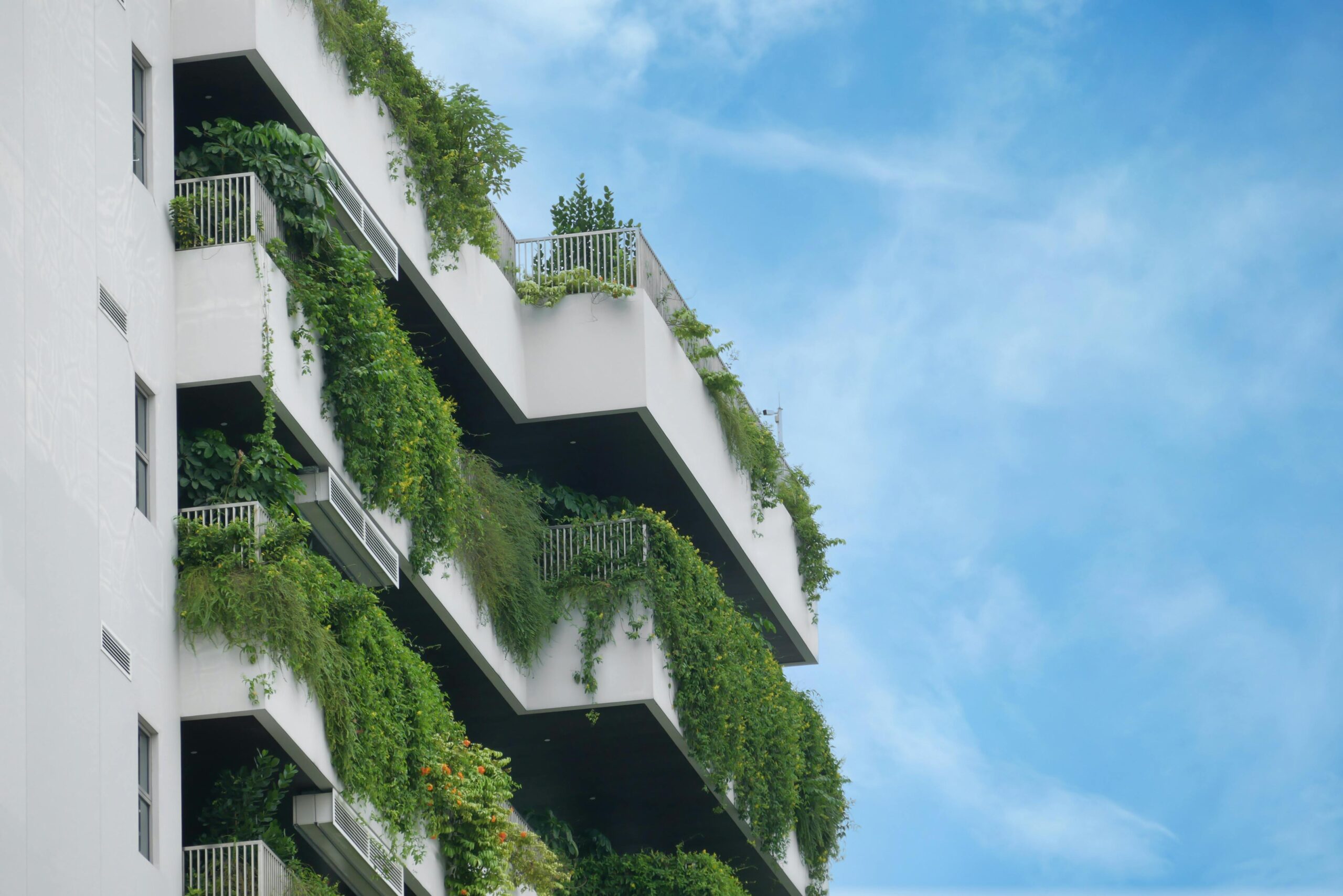
Today, living building technologies encompass three primary categories: green roofs that transform unused horizontal spaces into productive gardens, vertical forests that bring woodland ecosystems to building facades, and adaptive facades that respond intelligently to changing environmental conditions. Each technology offers unique benefits while contributing to a comprehensive vision of sustainable urban development.
Green Roofs: Transforming Rooftops into Ecological Assets
Green roofs have emerged as one of the most accessible and effective living building technologies. By replacing traditional roofing materials with layered systems that support plant growth, buildings gain numerous environmental and economic advantages. These installations range from extensive systems with shallow soil and hardy ground covers to intensive gardens with deep growing media supporting trees and recreational spaces.
Environmental Benefits of Green Roofing Systems
The ecological impact of green roofs extends far beyond their physical boundaries. A well-designed green roof absorbs rainwater, reducing stormwater runoff by 50-90% depending on design and climate conditions. This water retention capability significantly decreases the burden on municipal drainage systems, particularly during heavy rainfall events that increasingly challenge urban infrastructure due to climate change.
Temperature regulation represents another critical benefit. Green roofs can be 30-40 degrees Fahrenheit cooler than conventional roofs on hot summer days, reducing building cooling costs by 25% or more. This cooling effect extends beyond individual buildings, helping mitigate urban heat island effects that make cities several degrees warmer than surrounding rural areas.
Biodiversity enhancement often surprises urban planners. Green roofs create habitats for pollinators, birds, and beneficial insects, establishing ecological corridors that connect fragmented urban green spaces. Cities like Copenhagen and Toronto have documented significant increases in urban wildlife populations following widespread green roof adoption.
Implementation Considerations and Design Strategies
Successfully implementing green roofs requires careful planning and professional expertise. Structural capacity must be evaluated since green roofs add significant weight—extensive systems typically add 15-50 pounds per square foot, while intensive gardens may add 80-150 pounds per square foot. Many existing buildings require structural reinforcement before installation.
Waterproofing and drainage systems form the foundation of any successful green roof. Multiple protection layers prevent root penetration while ensuring proper water movement. Drainage mats, filter fabrics, and growing media must work together harmoniously to support plant health while protecting the building structure beneath.
Plant selection determines long-term success and maintenance requirements. Native and adapted species generally outperform exotic plants, requiring less water and fertilizer while providing better habitat value. Sedum species dominate extensive green roofs due to their drought tolerance and shallow root systems, while intensive gardens support diverse plantings including grasses, perennials, shrubs, and even small trees.
🌲 Vertical Forests: Bringing Nature to Building Facades
Vertical forests represent perhaps the most visually striking living building technology. These architectural marvels integrate hundreds or thousands of trees, shrubs, and plants directly into building facades, creating the equivalent of hectares of forest coverage on vertical surfaces. The concept gained international attention with Stefano Boeri’s Bosco Verticale towers in Milan, which house over 900 trees and 20,000 plants across two residential towers.
Ecological and Social Impact of Vertical Greening
The environmental benefits of vertical forests are substantial and measurable. A single vertical forest tower can absorb approximately 30 tons of carbon dioxide annually while producing oxygen equivalent to what 20,000 square meters of traditional forest generates. This air purification capacity is particularly valuable in dense urban cores where ground-level green space is limited or prohibitively expensive.
Particulate matter filtration provides another crucial service. Tree leaves and plant surfaces capture dust, smog particles, and other airborne pollutants, improving air quality for building residents and surrounding neighborhoods. Studies of vertical forests in polluted urban areas show particulate matter reductions of 20-30% in immediate proximity to vegetated facades.
The psychological and social benefits deserve equal attention. Residents of vertical forest buildings report higher satisfaction levels, improved mental health, and stronger sense of community compared to conventional high-rise dwellers. The presence of nature creates natural gathering points and conversation starters, fostering social connections in otherwise anonymous urban environments.
Engineering Challenges and Technical Solutions
Creating successful vertical forests requires sophisticated engineering and ongoing maintenance systems. Each tree on a facade needs individualized irrigation, drainage, and root containment. Automated irrigation systems with moisture sensors ensure plants receive appropriate water without waste or structural damage from excess moisture.
Wind loading calculations become exponentially more complex when facades include mature trees. Engineers must account for additional wind resistance while ensuring trees remain securely anchored during storms. Specialized planting containers with engineered soil mixes provide stability while minimizing weight—a constant concern in vertical construction.
Maintenance accessibility poses unique challenges. Vertical forests require specialized crews trained in both arboriculture and high-rise access techniques. Regular pruning, fertilization, pest management, and occasional plant replacement are essential. Buildings typically incorporate dedicated maintenance infrastructure including anchor points for suspended platforms and storage for equipment and materials.
💡 Adaptive Facades: Intelligent Building Skins
Adaptive facades represent the cutting edge of responsive architecture, using advanced materials and control systems to optimize building performance dynamically. These intelligent skins adjust their properties in response to environmental conditions, occupant needs, and energy demands, creating buildings that breathe, shade themselves, and generate power as conditions warrant.
Types of Adaptive Facade Technologies
Kinetic shading systems use movable panels, louvers, or screens that rotate or slide to control solar heat gain and natural light penetration. The Al Bahar Towers in Abu Dhabi exemplify this approach with computer-controlled umbrella-like screens that open and close based on sun position, reducing cooling loads by more than 50% while maintaining views and natural light.
Electrochromic and thermochromic glazing changes its transparency or tint in response to electrical current or temperature changes. These smart windows eliminate the need for mechanical shading devices while providing precise control over solar heat gain and glare. Recent advances have made these technologies more affordable and responsive, with transition times measured in minutes rather than hours.
Breathing facades incorporate double-skin designs with ventilated cavities that can be opened or closed to control heat exchange. During summer, vents open to exhaust hot air, preventing heat buildup. In winter, closed cavities create insulating air barriers that reduce heating demands. Some systems integrate photovoltaic panels within the cavity, generating electricity while contributing to thermal management.
Integration with Building Systems and Controls
Maximizing adaptive facade performance requires seamless integration with building management systems. Sensors continuously monitor interior and exterior conditions including temperature, humidity, light levels, and occupancy patterns. Sophisticated algorithms analyze this data to optimize facade configurations for comfort, energy efficiency, and occupant preferences.
Machine learning increasingly drives facade control strategies. Systems learn from past performance, weather forecasts, and occupant behavior patterns to anticipate needs and adjust proactively rather than reactively. This predictive approach yields energy savings of 20-40% compared to conventional facades with basic automated controls.
User override capabilities balance automation with personal control. Occupants can adjust local conditions through smartphone apps or control panels, with systems learning from these interventions to refine future automated decisions. This hybrid approach achieves both energy efficiency and occupant satisfaction—goals that often conflict in fully automated systems.
🏙️ Synergistic Benefits of Integrated Approaches
The most transformative urban projects combine multiple living building technologies into integrated systems where benefits multiply. A building with green roof, vertical forest elements, and adaptive facade achieves performance levels impossible with any single technology. These synergies create buildings that approach carbon neutrality while enhancing urban livability.
Water management exemplifies these synergies. Green roofs capture and slowly release rainwater, which vertical forest irrigation systems then utilize, while adaptive facades adjust based on humidity levels influenced by transpiring plants. The result is a closed-loop system that minimizes municipal water consumption while maximizing cooling and air quality benefits.
Energy performance similarly benefits from integration. Plant shading from vertical forests reduces cooling loads that adaptive facades further optimize through intelligent solar control. Green roofs insulate buildings while reducing ambient temperatures that affect facade thermal performance. Combined, these technologies can reduce building energy consumption by 60% or more compared to conventional construction.
Economic Considerations and Return on Investment
Living building technologies require higher initial investments than conventional construction, but lifecycle cost analysis increasingly favors green approaches. Green roofs typically cost $15-25 per square foot installed for extensive systems, with intensive gardens ranging from $25-40 per square foot. However, these systems last 40-50 years—double the lifespan of conventional roofs—while providing continuous energy savings and stormwater management benefits.
Vertical forests involve even higher initial costs, often adding 10-20% to total construction budgets. However, property values in vertical forest buildings command premiums of 15-30% in markets where these technologies remain novel. As more projects demonstrate long-term performance and desirability, these premiums are likely to stabilize while construction costs decrease through standardization and competition.
Adaptive facades present diverse economic profiles depending on technology choices. Basic automated shading systems may add only 5-10% to facade costs while delivering substantial energy savings. Advanced electrochromic glazing currently costs 3-5 times more than high-performance static glass, though prices continue declining as production scales increase. Energy savings often achieve payback periods of 7-15 years, with additional value from improved comfort and flexibility.
Policy Frameworks and Incentive Programs
Progressive cities worldwide have implemented policies encouraging or mandating living building technologies. Toronto requires green roofs on most new construction with roof areas exceeding 2,000 square feet. Copenhagen aims to make all public building roofs green by 2025. Singapore offers significant density bonuses for projects incorporating vertical greenery, effectively subsidizing implementation through increased development potential.
Financial incentives complement regulatory approaches. Many municipalities offer grants covering 20-50% of green roof installation costs. Tax credits, expedited permitting, and stormwater fee reductions further improve project economics. Germany’s KfW banking group provides low-interest loans specifically for energy-efficient building technologies including adaptive facades, making advanced systems accessible to smaller developers.
Performance-based incentives are emerging as more sophisticated policy tools. Rather than prescribing specific technologies, these programs reward measured outcomes like stormwater retention, energy efficiency, or air quality improvement. This outcome-focused approach encourages innovation while ensuring public investments deliver intended benefits.
🔮 Future Developments and Emerging Technologies
The next generation of living building technologies promises even more dramatic urban transformations. Researchers are developing photosynthetic building materials that generate oxygen and capture carbon while serving structural functions. Bio-receptive concrete supports moss and lichen growth without additional infrastructure, potentially transforming every urban surface into a photosynthesizing ecosystem.
Artificial intelligence and sensor networks will enable buildings to function as interconnected urban organisms. Facade systems could communicate with each other, coordinating shading patterns to optimize street-level microclimates. Green roofs might adjust irrigation based on neighborhood-wide weather predictions and water availability, maximizing efficiency across entire districts.
Integration with urban agriculture represents another frontier. Vertical farms could combine food production with building climate control, using plant transpiration for cooling while producing fresh vegetables for building occupants. Rooftop aquaponics systems might integrate with green roofs, creating closed-loop ecosystems that process organic waste, produce food, and enhance biodiversity simultaneously.
Realizing the Vision of Living Cities
Living building technologies are not merely architectural trends but fundamental reimaginings of humanity’s relationship with urban environments. As climate change intensifies and urban populations grow, cities must evolve from resource consumers into regenerative systems that enhance rather than degrade environmental quality. Green roofs, vertical forests, and adaptive facades provide practical, proven pathways toward this transformation.
The widespread adoption of these technologies requires collaboration among architects, engineers, policymakers, developers, and communities. Technical challenges continue emerging, but each implemented project builds knowledge and capacity that makes subsequent installations more successful and affordable. Early adopters demonstrate possibilities that inspire broader acceptance and investment.
The urban landscapes of tomorrow will look dramatically different from today’s concrete and glass canyons. Buildings will breathe, grow, and adapt as living entities integrated into urban ecosystems. Streets will feel cooler, air will smell fresher, and cities will support both human flourishing and biodiversity. This revolution is not distant speculation—it is happening now in forward-thinking cities worldwide, proving that technology and nature can unite to create truly sustainable urban futures.